free Worldwide shipping - try 30 days risk-free

How Watch Dials Define Design, Function, and Value

TL;DR:
- The watch dial is the primary interface affecting readability, craftsmanship, and collector value.
- Dial materials and finishing techniques, like guilloché or enamel, greatly influence quality and artistry.
- Customization debates revolve around authenticity, with thoughtful choices enhancing long-term value and personal expression.
Most watch enthusiasts spend hours debating case shapes, movements, and bracelet options. The dial? Often treated as a pretty face slapped on top of the real engineering. That assumption is wrong, and it costs modders real money and satisfaction. A dial is the primary interface between you and your watch. It shapes legibility, communicates craftsmanship, and drives collector value in ways that no other component can replicate. Whether you’re building a Seiko mod inspired by a Royal Oak or evaluating a vintage piece, understanding what a dial actually does changes how you see every watch on your wrist.
Table of Contents
- The functional foundation: Why dials matter in timepiece design
- Material and manufacturing: How dials are crafted
- Artistry, craftsmanship, and value: The nuances of special dials
- Customization, modification, and ethical debates: Changing the dial
- A collector’s perspective: Rethinking dials in the custom era
- Bring your watch vision to life with custom dials
- Frequently asked questions
Key Takeaways
| Point | Details |
|---|---|
| Dial design shapes function | Dial contrast, markers, and finishes directly impact every timepiece’s ease of use and recognition speed. |
| Material and method matter | What a dial is made of and how it’s crafted determines both looks and value, especially for mods. |
| Craftsmanship vs. mass production | Hand-crafted dials offer unique artistry and value, while machine-made versions provide affordability but less distinction. |
| Customization has ethical trade-offs | Replacing dials can enhance style or decrease long-term value, so plan mods thoughtfully. |
The functional foundation: Why dials matter in timepiece design
Let’s start with the basics of what a dial actually accomplishes. It isn’t decoration. It’s a communication system. Every color choice, texture decision, and marker placement directly determines how fast and accurately you can read the time under real-world conditions.
Research into watch dial readability confirms what experienced modders already sense: high-contrast dials with bold markers reduce time recognition to around 0.8 seconds, while low-contrast or overly decorative dials can push that latency past 2.3 seconds. That’s nearly three times slower. In practical terms, that gap matters every time you glance at your wrist during a meeting or a workout.
Finish choices compound this effect. Matte dials absorb ambient light rather than bouncing it back, which reduces glare in bright outdoor settings. Sunray finishes, by contrast, create a depth illusion that looks stunning in photography but can wash out under direct sunlight. Glossy lacquer dials read beautifully indoors and under controlled lighting but become mirrors in harsh conditions. If you want to learn the basics of watch dials before going deeper, that foundation will sharpen every decision you make here.
Here are the most common dial features and how they affect your daily experience:
- Applied indices: Three-dimensional markers that cast subtle shadows, improving depth perception and legibility
- Printed indices: Flat, cost-effective, and highly customizable but less tactile
- Lume plots: Photoluminescent material on markers and hands for low-light reading
- Texture patterns: Sunburst, brushed, or guilloche surfaces that change character under different light angles
- Sub-dials: Complications like chronographs or date windows that add information but can crowd the visual field
Pro Tip: When planning a Seiko mod, think about where you’ll wear the watch most. A deep blue sunray dial looks incredible at dinner but can fight you on a bright ski slope. Match the finish to your lifestyle, not just your mood board.
Every dial decision is a trade-off between aesthetics and utility. The best modders treat those trade-offs consciously rather than accidentally.
Material and manufacturing: How dials are crafted
Function and form are only possible because of the underlying materials and methods. Understanding how dials come to life gives you real leverage when choosing or commissioning a custom piece.
Most watch dials start as brass or titanium blanks, pressed and cut to the exact case diameter. Brass is the industry standard because it machines cleanly, accepts plating well, and holds printed or applied finishes reliably. Titanium offers a lighter, more corrosion-resistant alternative but costs more to work with and requires specialized tooling.
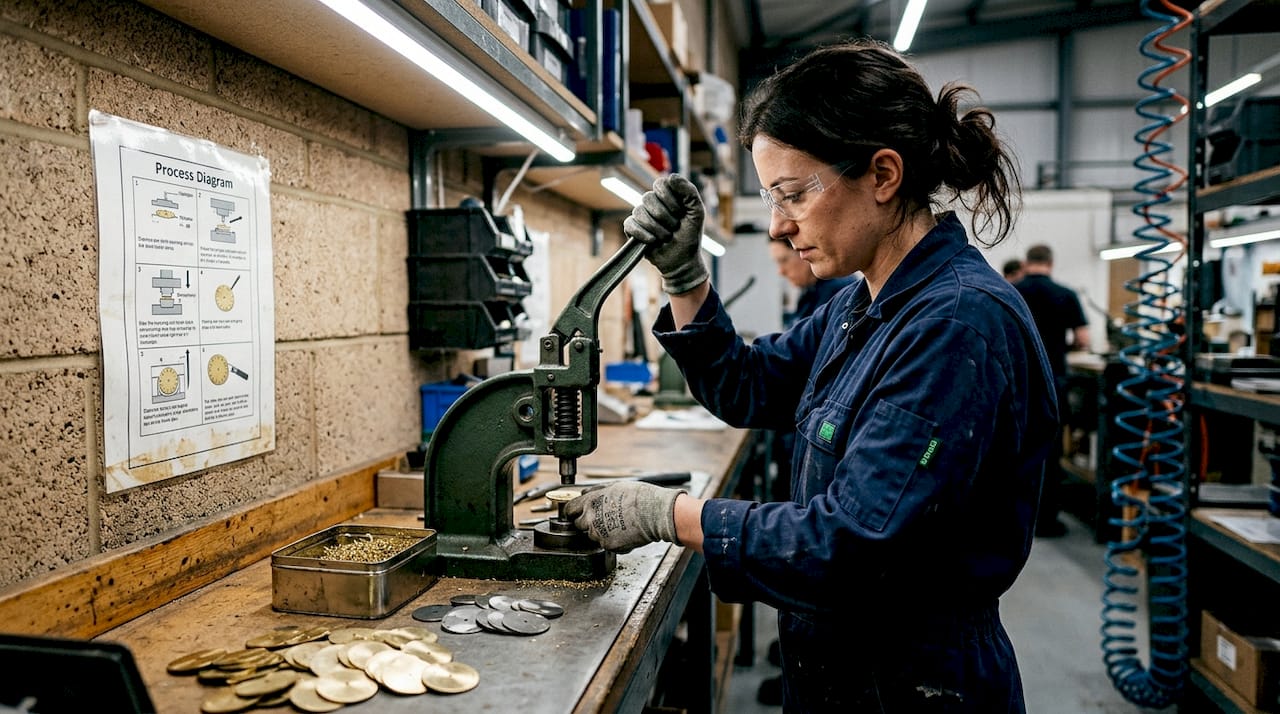
Here’s a quick look at how manufacturing technique shapes the final result:
| Technique | Process | Visual result | Best for |
|---|---|---|---|
| Pad printing | Ink transferred via silicone pad | Flat, precise graphics | Entry-level, high volume |
| Guilloché | Engine-turned geometric engraving | Intricate, light-refracting patterns | Luxury, artisanal pieces |
| Enamel firing | Powdered glass fused at high heat | Deep, glassy color | Heritage, high-end mods |
| Electroplating | Metal coating applied via electric current | Consistent color, metallic sheen | Most production dials |
| Lacquering | Resin layers applied and cured | Glossy, smooth surface | Fashion and mid-range |
For those curious about what goes into producing a dial from scratch, here’s a simplified sequence:
- Blank preparation: The metal sheet is cut, drilled for hands and stem, and deburred
- Surface treatment: Brushing, polishing, or sandblasting to create the base texture
- Decoration: Guilloché engraving, enamel application, or printing is applied at this stage
- Finishing coat: Lacquer or PVD coating seals the surface and sets the color
- Index application: Applied markers or printed indices are added last
- Quality check: Each dial is inspected for alignment, finish consistency, and defect-free surfaces
For modders, this sequence matters because it tells you where customization is possible and where it gets expensive fast. Our custom dial guides walk through which stages you can realistically influence when commissioning a Seiko mod dial versus buying off the shelf.
Guilloché deserves special mention. The guilloché dial crafting process uses a rose engine lathe to cut overlapping geometric patterns into the metal surface. The result is a dial that seems to move as light shifts across it. It’s time-consuming, requires immense skill, and cannot be fully replicated by machine, which is exactly why it commands a premium.
Artistry, craftsmanship, and value: The nuances of special dials
Once you understand how dials are made, a whole level of artistry and value nuance comes into play. Not all dials are equal, and the difference between hand-crafted and machine-made goes far beyond price.
| Feature | Hand-made dial | CNC/stamped dial |
|---|---|---|
| Pattern consistency | Organic, slight irregularities | Perfectly uniform |
| Depth of engraving | Deep, varied | Shallower, consistent |
| Production time | Hours to days per dial | Minutes per dial |
| Cost | High | Low to moderate |
| Collector appeal | Very high | Moderate |
| Customizability | High (one-off possible) | Limited by tooling |
The distinction matters enormously for value. As hand-guilloché research shows, true hand-engine-turned dials carry organic irregularities that are actually proof of skill, not flaws. A CNC-cut pattern is flawless but shallow. Collectors who know what they’re looking at can spot the difference immediately.
“Original dials are critical for value retention in luxury watches. A Patek Philippe with a replaced dial, even a high-quality replacement, loses a significant portion of its market value compared to an all-original example.”
This principle extends into the modding world. When you swap a dial on a custom Seiko, you’re not dealing with Patek-level collector markets, but the logic still applies. A thoughtful, well-executed dial choice adds perceived and real value. A careless swap that ignores fit, finish, or proportional balance does the opposite.
Signs of genuine handcraftsmanship in a dial include slightly varied line depths across the pattern, crisp but not robotically perfect edges on applied indices, and enamel surfaces with a subtle organic texture rather than a plastic-smooth finish. Industrial dials are clean but flat. Artisanal dials have life.
Pro Tip: If you’re building a mod you plan to keep long-term or sell, invest in the dial first. It’s the most visible component and the one that signals quality to anyone who looks closely. Check our detailed custom dial guide for specific sourcing recommendations.
Customization, modification, and ethical debates: Changing the dial
With craft and authenticity covered, it’s time to look at dial swaps and modding, where enthusiasts shape their own stories.
Dial modification covers a wide range of interventions. Here’s what’s actually possible:
- Full dial replacement: Swapping the stock dial for a custom or aftermarket alternative
- Refinishing: Repainting, re-luming, or re-printing an existing dial
- Index replacement: Removing printed indices and adding applied markers
- Texture modification: Sandblasting or brushing the dial surface for a new look
- Color treatment: Anodizing or PVD coating to shift the dial’s base color
The ethical landscape around these changes is genuinely contested. Perspectives on watch customization split along a clear line: reversible changes like strap swaps are broadly accepted, while irreversible interventions like dial replacement or case modification generate real debate. The argument against aggressive modding is rooted in authenticity. The argument for it is rooted in personal expression and the idea that a watch should serve its owner, not a future collector.
For Seiko mods, this debate lands differently than it does for vintage Rolexes. Seiko parts are affordable, widely available, and purpose-built for modification by a huge global community. Nobody is destroying horological history by fitting a custom sunburst dial to an NH35 movement. The ethical perspectives on modding become more pointed when the base watch carries genuine historical or collector significance.
Collectors generally view irreversible dial changes in two ways. The first camp sees them as a permanent reduction in originality and therefore value. The second sees a well-executed mod as a new category of collectible entirely, one that values creativity and craft over factory authenticity. Both views are defensible.
Pro Tip: Before committing to an irreversible dial change, ask yourself whether you’d be comfortable explaining that decision to a future buyer. If the answer is yes, proceed. If it feels like something you’d need to hide, reconsider. Read more about watch customization explained and the reasons people personalize their watches to sharpen your own position.
A collector’s perspective: Rethinking dials in the custom era
The debates around customization show how complex the dial’s influence really is. Here’s what most guides skip entirely.
A dial isn’t just something you see. It’s something you experience. The texture under a loupe, the way lume plots glow at 2 a.m., the subtle resistance of applied indices when light hits them at an angle. These sensory details create the emotional bond that makes a watch feel like yours rather than just a thing you own.
The hidden trap in the modding scene is chasing visual trends over tactile and proportional integrity. A dial that photographs beautifully but feels cheap under scrutiny will always disappoint over time. We’ve seen it repeatedly: modders invest in a stunning case and movement, then cut corners on the dial because it seems like the easy part. It isn’t.
Radical dial changes are worth the trade-off when the new dial genuinely reflects who you are and how you use the watch. They’re not worth it when they’re chasing a forum trend that will look dated in two years. Avoid the mistakes in dial modding that come from prioritizing novelty over substance. The watches people keep for decades are almost always the ones where the dial was chosen with real intention.
Bring your watch vision to life with custom dials
Ready to put knowledge into action? Everything covered here, from legibility science to guilloché craftsmanship to the ethics of modding, points toward one practical conclusion: the dial deserves your most deliberate attention.
At Ottoman Prieur, we build Seiko mods where dial selection is treated as the centerpiece of the design process, not an afterthought. Whether you want to configure your own Seiko mod from scratch, browse our curated pieces at the Seiko mod store, or have something completely unique built for you, we can make it happen. You can also request a custom watch with specific dial requirements and our team will work with you directly. Every order ships free worldwide with a 30-day money-back guarantee.
Frequently asked questions
What is the main function of a watch dial?
A watch dial displays the time by organizing hour markers, minute tracks, and hands into a readable layout. Dial legibility research confirms that design choices directly affect how quickly and accurately you can read the time.
Which materials are most common for watch dials?
Most dials are made from brass or titanium, selected for machinability, durability, and how well they accept surface treatments. Brass and titanium are the two dominant base materials across both production and custom watchmaking.
How do custom dials affect a watch’s value?
A well-chosen custom dial can elevate a mod’s uniqueness and appeal, but replacing an original dial on a luxury piece typically reduces collector value. Original dials are considered essential to value retention in high-end watches like Patek Philippe.
What’s the difference between printed and applied dials?
Printed dials use ink transferred onto the surface, making them affordable and precise but flat. Applied dials feature three-dimensional markers or guilloché patterns that are artisanal and luxurious compared to their printed counterparts.
Is it ethical to swap a luxury watch dial for a custom one?
Opinions are genuinely divided. Many enthusiasts see dial swaps as creative expression, while purists argue that irreversible dial changes compromise authenticity and long-term value in ways that can’t be undone.
